
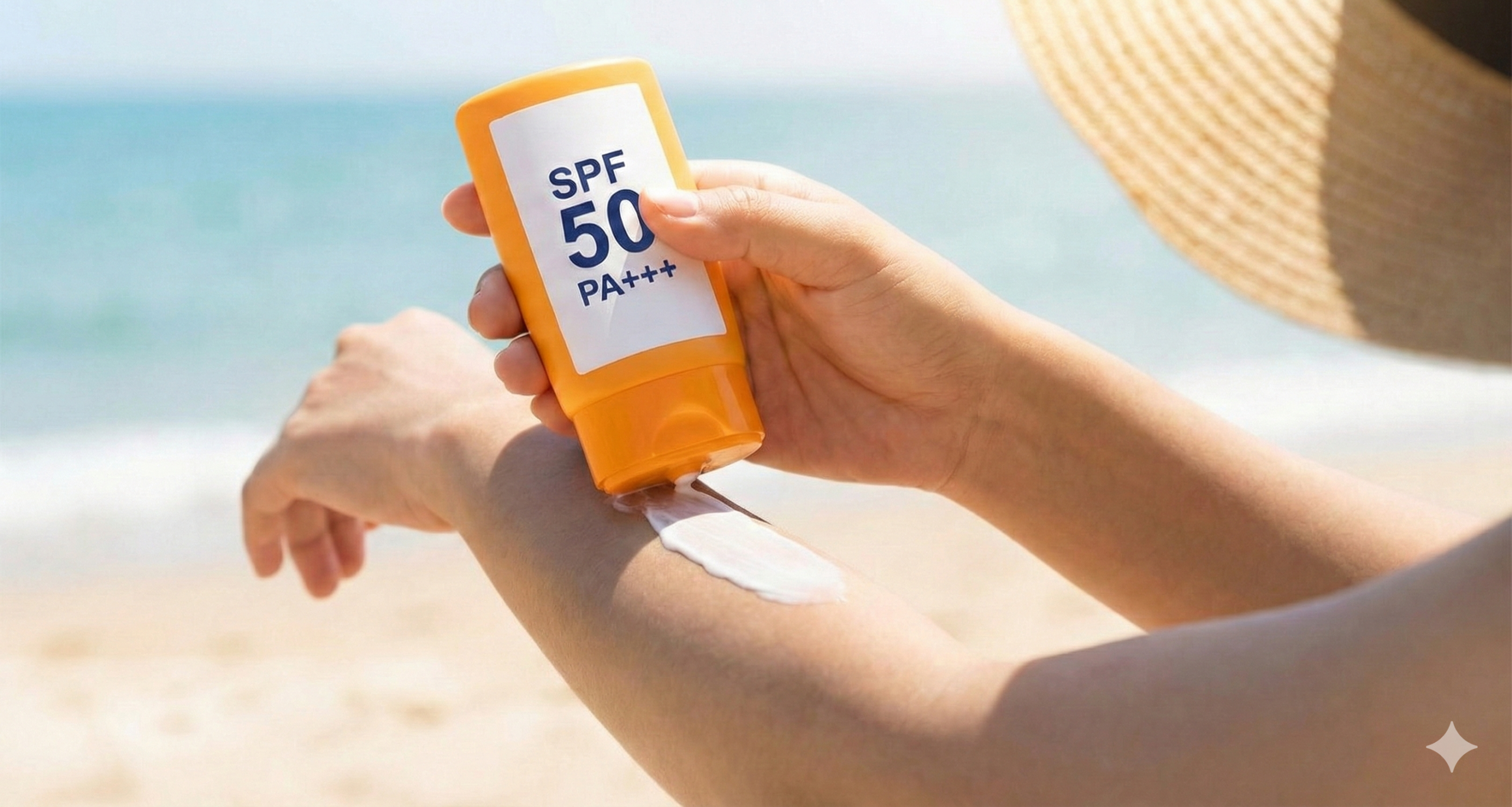
Sunscreen labels can often feel confusing. Terms like SPF 50, PA+++, broad-spectrum, infrared defence, and blue light protection are commonly seen — but what do they truly mean for your skin?
Understanding these terms helps you choose protection that goes beyond basic sun care and supports long-term skin health.
What Does SPF 50 Actually Mean?
SPF stands for Sun Protection Factor. It measures protection against UVB rays, which are primarily responsible for sunburn and direct DNA damage.
SPF 50 means your skin is protected from approximately 98% of UVB rays when applied correctly and in sufficient quantity.
However, SPF only refers to UVB protection. It does not measure protection against UVA rays, which penetrate deeper into the skin.
Why UVA Protection Matters
UVA rays are present all year round and can pass through clouds and windows. They penetrate deeper into the skin and are associated with:
- Premature aging
- Collagen breakdown
- Fine lines and wrinkles
- Pigmentation
- Long-term skin damage
This is where the PA rating becomes important.
What Does PA+++ Mean?
PA grading measures protection against UVA radiation.
The system works like this:
PA+ → Some UVA protection
PA++ → Moderate UVA protection
PA+++ → High UVA protection
PA++++ → Extremely high UVA protection
PA+++ indicates strong UVA defence, making it essential for preventing photoaging and pigmentation.
When SPF and PA ratings are combined, they offer broader protection against both UVB and UVA rays.
What Does Broad-Spectrum Protection Mean?
A sunscreen labeled broad-spectrum protects against both: - UVB (burning rays)
- UVA (aging rays)
Without broad-spectrum coverage, sunscreen may protect against sunburn but still allow deeper skin damage.
For daily use, broad-spectrum protection is non-negotiable.
Modern Skin Needs More Than UV Protection
Today, skin is exposed to more than just sunlight. Environmental aggressors include: - Infrared radiation (IR)
- Blue light from digital devices
- Urban pollution
- Heat and oxidative stress
Advanced sunscreen formulations now include additional protective technologies such as:
Encapsulated filters for stability and reduced irritation
Infrared defence complexes
Anti-pollution bio-polymers
Antioxidants like Vitamin E
These additions help reduce oxidative stress and support long-term skin resilience.
How Much Sunscreen Should You Use?
Even the best sunscreen is ineffective if under-applied.
For the face and neck, use approximately two finger lengths of product. Apply 15 minutes before sun exposure and reapply every 2–3 hours, especially after sweating or washing the face.
Daily use — even indoors — is recommended due to UVA penetration through windows and exposure to blue light.
Prevention Is Easier Than Correction
Sun damage accumulates silently over time. Fine lines, pigmentation, and loss of elasticity often appear years after consistent exposure.
Daily SPF 50 with PA+++ protection is not just cosmetic care — it is preventative skin health.
Protecting your skin today preserves its strength, clarity, and resilience for the future.